
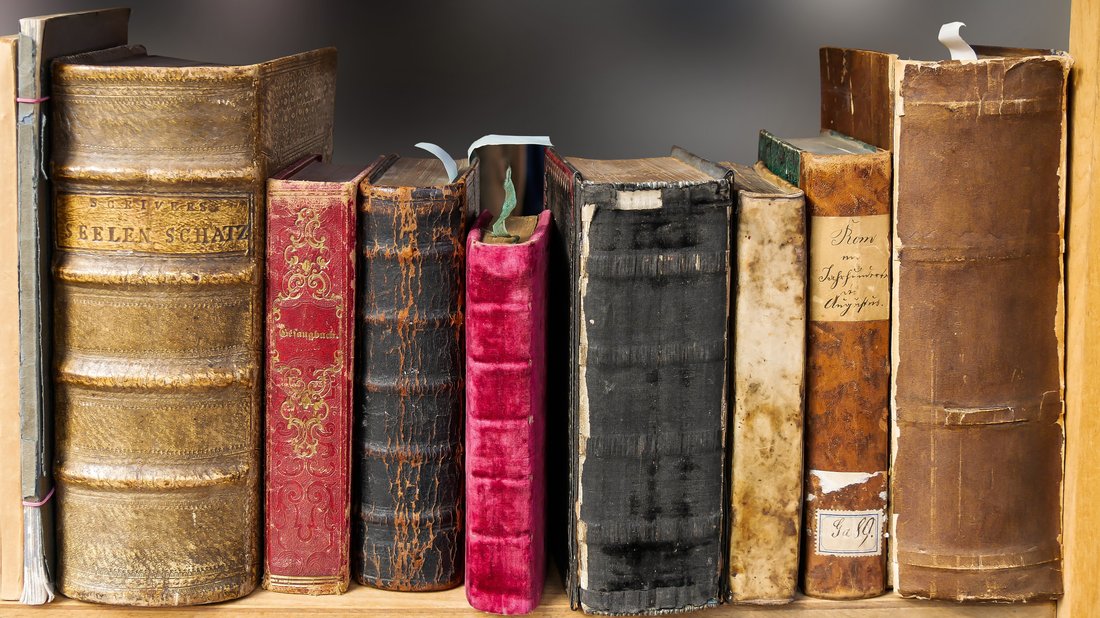
Try reading this the way a Roman would have met it: WITHOUTANYSPACESBETWEENTHEWORDSANDNOPUNCTUATIONATALL. That is what a page looked like for much of the history of writing, and it explains something that surprises most people: for thousands of years, reading usually meant reading out loud. What follows is not one story but several, because reading was invented more than once, in places that had never heard of each other.
Writing was invented at least three separate times
The familiar account starts in Mesopotamia around 3200 BCE, where cuneiform grew out of accounting. It is only one origin among several.
Independent inventions of writing
Mesopotamia, China, and Mesoamerica
Each of these societies devised a full writing system without borrowing the idea from the others. The Indus Valley script of Harappan civilization, used roughly 2600 to 1900 BCE, may be a fourth, though it remains undeciphered.
China’s oracle bones came within a hair of being lost entirely, because people were eating them.
Shang dynasty diviners inscribed questions onto turtle plastrons and ox shoulder blades, applied heat, and read the cracks. After the dynasty fell in 1046 BCE the bones were buried in the ruins of the capital and forgotten so completely that no surviving Chinese text records them. Farmers near Anyang dug them up centuries later and sold them to apothecaries as longgu, dragon bones, to be ground into medicine.
In 1899 a scholar named Wang Yirong, chancellor of the Imperial Academy and an authority on ancient bronze and stone inscriptions, fell ill with malaria. He had the habit of inspecting every ingredient in his prescriptions. On the dragon bones he found carved marks, and recognized that the writing was older than the seal script he knew. He bought up the pharmacy’s entire stock and began collecting through dealers.
Picture the room
A sick man in Beijing turning a piece of medicine over in his hands, holding it to the light, recognizing that the scratches on it are words in a script nobody has read for three thousand years, and that the pharmacy has a barrel of them.
Dealers quickly grasped what they had and began selling by the character, at roughly a silver dollar per character, while deliberately hiding where the bones came from in order to protect their supply. Wang Yirong died the following year, in 1900, during the siege of Beijing, and never got to pursue the discovery. His son sold the collection to the writer Liu E, who published the first printed selection in 1903. Only later did Luo Zhenyu trace the source to Xiaotun village near Anyang, the site of the late Shang capital.
Scientific excavation began in 1928. Across fifteen seasons to 1937, archaeologists recovered 24,918 inscribed pieces; a single pit opened in 1936 held more than sixteen thousand. Of roughly 4,500 distinct characters identified overall, only about 1,600 to 2,200 have been confidently matched to modern equivalents. The rest are still being worked on.
That script is the direct ancestor of the characters used in China today, which makes Chinese the longest continuously used writing system on earth: an unbroken line of more than three thousand years, which survived by being mistaken for medicine.
The unspaced page, and why it was never only a European problem
Greek and Latin texts ran as unbroken strings of letters, a style called scriptio continua. The Codex Sinaiticus, a Greek Bible copied around 350 CE, is written this way.
Curiously, this was a step backward that someone chose. Early Greek and Roman inscriptions often separated words with small dots called interpuncts. Latin adopted continuous script from Greek practice because it was thought more elegant. Legibility was traded for style.
Here is the part usually left out. Running text together is not a historical curiosity that civilization outgrew. Thai, Burmese, Javanese, and languages written in Chinese characters still do it. Millions of people read without word spaces every day, perfectly fluently. Word separation was a solution to a particular problem in a particular script family, and never a universal upgrade.
Picture the room
A house in Rome in the early evening. A man unrolls a scroll and begins to murmur, working along a wall of letters with no gaps in it. Nobody thinks this odd. The silent reader would be the strange one.
The most famous anecdote in reading history, and why it is misread
Around 400 CE, Augustine described watching Ambrose, Bishop of Milan, read: his eyes moved across the page and his heart searched out the meaning, while his voice and tongue stayed still.
The passage is quoted constantly as proof that silent reading had just been invented. Scholars now largely reject that. Researchers including Gavrilov and Carruthers have argued that Augustine was not amazed silent reading was possible; he was accounting for what looked like rudeness, a man reading privately while visitors came and went.
The evidence supports them. Characters read silently on stage in Euripides and Aristophanes in the fifth century BCE. What was unusual was doing it in company.
The monks who invented the space
The change that did reshape European reading came from an unexpected direction. From the late seventh century, Irish scribes began inserting spaces at irregular intervals, producing what Paul Saenger calls aerated text. The practice spread slowly to the continent, and by the eleventh century northern European scribes were separating words as we do now.
Why so long? Saenger's answer is uncomfortable. The ancient world did not particularly want reading to be easy. Fast retrieval, easier access to difficult texts, and wider literacy were not seen as goods. The idea that ordinary people in large numbers should read independently was foreign to an elite culture built on oratory and trained memory.
The book took different shapes in different places
The codex, sheets stacked and bound along one edge, appeared in the Roman world between roughly the first and fourth centuries CE, and gave readers something a scroll cannot: random access. You could open to a page, mark it, and compare two passages. That single capability made cross-referencing, study, and argument possible.
Elsewhere, people solved the same problem differently.
Maya books
Mesoamerica
The Maya made huun, paper from the inner bark of wild fig trees, with archaeological evidence of bark paper use from the early fifth century. Contemporary accounts judged it superior to Egyptian papyrus in texture, durability, and flexibility. Books were long strips folded like a screen, with covers reportedly of wood lined in jaguar skin, and some had clasps.
In Classic Maya the word huun meant the book, the paper, and the fig tree it came from, all at once, and also the ritual headbands that signified rank. Among the Lacandon Maya the term survived into recent times as chak huun, red paper, for ritual headdresses. The language did not separate the text from the material it was made of.
Maya inscriptions name buildings called Xok Naah, Reading Houses, which some scholars read as places where codices were kept. Colonial sources record that books were held in the houses of priests. The scribes themselves were skilled specialists, and Maya texts credit them with distinct verbs for the work: one for writing or painting a text, another for carving it.
Four books survive. An entire literature, with its histories, astronomy, and ritual knowledge, reduced to four volumes plus what was carved in stone.
The climate finished what the fires began. Archaeologists excavating Maya tombs regularly find the ghosts of codices: the amate paper has decomposed in the humid lowlands, leaving only the thin stucco coating that once covered each page, fused into brick-like blocks. They cannot be opened. Attempts to separate them turn them to powder. Somewhere in those blocks are the pages nobody will ever read, which is the sharpest illustration available of how fragile a written culture can be.
In the Andes, the Inca kept records on khipu, arrangements of knotted and colored cords read by specialists called quipucamayocs. Whether khipu constitute writing is still debated. What is clear is that a large empire ran its administration on them.
In Ethiopia and Eritrea, texts were written in Ge'ez, an abugida still in liturgical use, producing one of the great manuscript traditions of pre-colonial Africa. Ethiopian books were often bound with chain stitching rather than the cords used along European spines, and richly illuminated well into the nineteenth century.
Rovás: the Hungarian script carved into wood
The Carpathian Basin and Transylvania
Old Hungarian script, rovásírás, takes its name from the verb róni, to notch or carve. Its letters are angular precisely because straight cuts are easier to make in wood than curves. The alphabet is built for the language it serves, carrying dedicated letters for sounds the Latin alphabet has no single character for: cs, gy, ly, ny, sz, ty, zs, and the vowels ö and ü.
The script was already in use before Hungary became a Christian kingdom. The Magyars settled the Carpathian Basin in 895, and rovás was their working script, carried with them rather than acquired after arrival. When the Latin alphabet came in with the new kingdom around 1000 CE, it was imposed for official and ecclesiastical record-keeping, and rovás was pushed out of state use. It did not stop being written.
What survives is mostly what was carved into hard materials, which skews the record badly. Wood rots. A script written mainly on wooden sticks, boards, and tally rods leaves almost nothing behind after a few centuries, so the everyday writing people actually did is largely gone. Hungarian scholarship makes the same point about the stone record: a great many carved inscriptions are thought to have been lost, in part through centuries of medieval indifference, and the script had to be substantially rediscovered in the twentieth century.
That rediscovery produced a serious body of research. Sebestyén Gyula published Rovás és rovásírás in 1909 and A magyar rovásírás hiteles emlékei in 1915; Németh Gyula followed with A magyar rovásírás in 1934, Jakubovics Emil with a study of the oldest alphabets in 1935, and Csallány Dezső with a 1963 monograph cataloguing 33 significant inscriptions.
Those catalogues describe a script in ordinary working use across centuries. Among the better-known items are the brick from Székelyderzs, the inscriptions at Bögöz, Karácsonyfalva, Csíkszentmárton and Csíkszentmihály, a Székely inscription recorded in Constantinople, the Énlaka inscription of 1668, the alphabets kept by Miskolczi Csulyak István, and the notes of Szamosközi István. Marsigli recorded an entire calendar written in rovás, which is a continuous text rather than a handful of carved words.
It was also taught as a full literary alphabet. A complete listing of 35 letters plus 15 ligatures survives in a 1483 book from the castle library at Nikolsburg, evidence that a standardized form existed by the fifteenth century. In 1598 Telegdi János published a primer on the script containing Hungarian texts written in it. Ligatures matter here: a script that develops combined characters is one being written at speed by people who use it constantly.
New inscriptions have continued to surface in Székely lands over the past several decades, and more are expected. The Magyar Katolikus Lexikon notes that after 1945 the research was no longer a task of the academic institutes, that several known monuments remain undescribed and unpublished, that no adequate inventory of them exists, and that the origin and relationships of the script are largely unresolved. Whatever one concludes about where rovás came from, the record is demonstrably incomplete, and it is incomplete partly because for decades nobody was funded to complete it.
The script traveled, too. The Jesuit missionary Zakariás János, writing from his mission in Peru in 1756, used rovás characters inside a Latin letter, apparently so the Hungarian passages could not be read by anyone else. Two centuries later the historian Peter Sugar, raised in Budapest, took his research notes in rovás while working in Yugoslavia, for the same reason: the secret police could not read them.
Printing did not begin in Germany
Gutenberg's press in the 1450s transformed Europe. It was not the beginning of printing, or even of movable type.
In China, Bi Sheng develops movable type made of ceramic. Shen Kuo describes the method in 1088, including the trick of setting one forme while printing from another.
In Korea, state-sponsored metal type casting is documented under Choe Yun-ui.
The Jikji, a Korean Buddhist anthology, is printed with cast metal type at Heungdeok-sa temple in Cheongju, 78 years before the Gutenberg Bible. It is the oldest surviving book printed this way, and is held today at the Bibliothèque nationale de France.
Gutenberg combines metal type casting, oil-based ink, and the press. Output rises, prices fall, and literacy follows.
Gutenberg's contribution was real: a system that made mass production economical in a script with few characters. Telling the story as though printing began with him simply removes four centuries of East Asian work from the record.
What the press did in Europe was break a monopoly. Institutions that controlled information because they controlled the copies could no longer control the copies. Literacy climbed over decades, spelling and punctuation standardized, and movements could be organized by leaders who never met their followers. Authorities responded with censorship, and sometimes with fire.
Reading now
We read more words in a day than most people in history read in a month, mostly on screens, mostly in fragments, mostly while something else competes for our attention. Nearly every previous shift, spaces between words, the codex, cheap print, made sustained reading easier. The current one is the first to make it harder.
That is worth naming without panic. Deep reading, the kind a long book asks for, is a specific skill built by practice. It was never natural. It was constructed slowly, in Ireland and Cheongju and Yucatán and Aksum, by people who kept choosing it.
Sources and further reading
- Paul Saenger, Space Between Words: The Origins of Silent Reading, Stanford University Press, 1997
- Medieval Codes, Spaces and Silence, summarizing Gavrilov and Carruthers on the Augustine passage
- Larry Hurtado, Silent Reading in Roman Antiquity
- Augustine, Confessions, c. 397-400 CE, Book VI
- Michael D. Coe, Breaking the Maya Code, on Maya script and Yuri Knorosov's decipherment
- New World Encyclopedia, Maya codices, on huun bark paper and the Dresden Codex
- Erik Velásquez García, Los códices mayas, Instituto de Investigaciones Estéticas, UNAM
- Ciencia UNAM, Los antiguos códices mayas, un tesoro astronómico y religioso, on the stucco remains of decomposed codices
- Wikipedia (español), Códices mayas, on huun, the four surviving codices, and the 1562 destruction ordered by Diego de Landa
- Artes de México, Códices mayas, on the meanings of huun and the form of Maya books
- Chen et al., Dating the Origin of Chinese Writing: Evidence from Oracle Bone Inscriptions, Rutgers University
- Research surveys on oracle bone character recognition, on the roughly 150,000 excavated fragments and the proportion deciphered
- 甲骨文 and 王懿荣 entries, Chinese Wikipedia, on the 1899 discovery, the dragon-bone trade, and the Academia Sinica excavations of 1928-1937
- 《了不起的甲骨文》, Dahe News, on Wang Yirong’s identification of the script and his death in 1900
- The Paper (澎湃新闻), 《谁是甲骨文的最早发现者》, on the competing accounts of the discovery
- Omniglot, Székely-Hungarian Rovás, on writing direction and materials
- Wikipedia and HandWiki, Old Hungarian script, on the Nikolsburg alphabet of 1483, the Énlaka and Csíkszentmárton inscriptions, and the later inscription corpus
- János Telegdi, Rudimenta Priscae Hunnorum Linguae, 1598
- Sebestyén Gyula, Rovás és rovásírás, Budapest, 1909, and A magyar rovásírás hiteles emlékei, Budapest, 1915
- Németh Gyula, A magyar rovásírás, Budapest, 1934
- Jakubovics Emil, A székely rovásírás legrégibb ábécéi, 1935
- Csallány Dezső, A székely-magyar rovásírás emlékei, Jósa András Múzeum Évkönyve, Nyíregyháza, 1963
- Vásáry István, A magyar rovásírás kutatása, Keletkutatás, 1974
- Magyar Néprajzi Lexikon, entry “rovásírás, székely rovásírás”, Magyar Elektronikus Könyvtár (mek.oszk.hu)
- Magyar Katolikus Lexikon, entry “székely rovásírás”, on the state and gaps of the research
- New Eastern Europe, New illiberalism and the old Hungarian alphabet, including the Peter Sugar account
- Dezső Csallány, on the Jesuit letters of János Zakariás and Dávid Fáy (1749-1756), Kaprinai collection, Budapest University Library, published in the yearbook of the Jósa András Museum, Nyíregyháza
- Bibliothèque nationale de France, Jikji, a treasure of the world of printing
- UNESCO Memory of the World Register, entry for the Jikji
- Shen Kuo, Dream Pool Essays, 1088, describing Bi Sheng's movable type
- Beinecke Rare Book and Manuscript Library, Yale, Ethiopic Manuscripts
- African History Extra, The intellectual history of Ethiopia and Eritrea: Ge'ez manuscripts and scholars
- World History Encyclopedia, The Printing Revolution in Renaissance Europe